
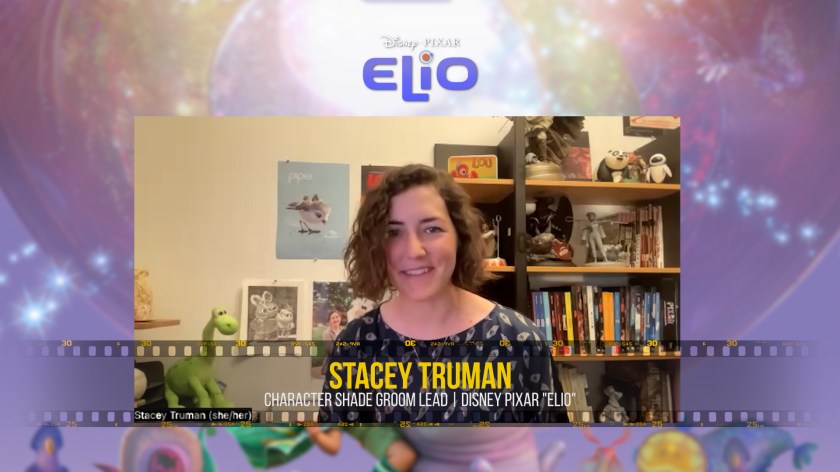
From bouncing coasts as a teen to bouncing light off digital hair strands at Pixar, Stacey Truman’s journey is anything but traditional.
The BYU grad and animation wizard behind the textures and tresses of “Elio” sat down with ABC4’s “See It or Skip It” creator Patrick Beatty to dish on the artistry (and techie headaches) of bringing characters to life frame by frame. We dive deep into the delicate dance between art and algorithms, the challenges of wet-hair physics, and what it takes to land a dream job in animation’s big leagues.
Q: “Are you originally from Utah? But what made you choose BYU?”
Stacey Truman: “I bounced around growing up from California to Massachusetts. We ended up in Utah for high school. I was always interested in art, and even in high school, I did AP art and loved it. I had had my sights set on BYU, and I knew they had some good programs, but I didn’t realize that before I applied, I should have applied to the art program I wanted to go to.”
“I got there and I couldn’t take any art classes because I hadn’t been accepted into anything. Then it turns out that animation had year-long, pre-courses that you could take to see if you like that one … The professors there were fabulous and just really gave us great, great guidance and kind of real pipeline experience with our student films. It’s very similar to how it works in the industry, where you work as a team to create something together, and each has their own roles and parts of the pipeline. Then we bring pieces of this big puzzle together.”
Q: “Let’s talk about hair, fur, clothing, everything that you were working on with ‘Elio.’ What was your approach to this new project, and how much of it was technical expertise and how much was just pure artistry?”
Stacey Truman: “It comes in waves of where you are in the pipeline for how creative you’re being, versus how much debugging and technical stuff is going on. Early on in the film, you’re just trying to find a look, right? Because it’s an original film and you don’t know what’s going to land, what’s going to feel right to your directors and to the art directors and everyone.”
“You’re just kind of bouncing off other things that we’ve done … You keep throwing darts at this board until you find this look, and art does a ton of prep beforehand of explorations, and they’ll give us drawings of these characters and tests that we should try out. But it is a collaboration between art and technology. These are concepts that are all 2D until we get into the computer and test things out and see the spins and see them move.”
“I remember with ‘Elio’, [a member of the animation team] did such an amazing job on his hair. And as he’s turning, you’ll see so many different angles, and we had to do so much dev work because as soon as you turn it set, it’s like, oh, we weren’t realizing that that line is just going to cut in right in this angle. Some people would laugh and say, ‘Why are you focusing so much on a lock of hair?; It all adds to it, because as our first impression of this character is going to tell us a lot.”
Q: “I’m so glad that you mentioned that, because during the movie, there’s a particular scene with Elio, where he’s on a beach and it’s dark and he is wet, so you can see there’s a lot of hair displacement everywhere. I’m imagining that might have been one of those bigger, challenging scenes in the movie, because it was just the attention to detail of that that was incredible to me.”
Stacey Truman: “Thank you. That was another very big collaboration between us and effects and simulations.”
Q: “I’m a Pixar fan through and through from ‘Toy Story’ on up, even the shorts. I noticed, like just texturally, everything has so much more detail now, where it really affects the way that you’re watching those films, versus something new now. What was the behind-the-scenes change or the breakthrough that maybe audiences don’t realize?”
Stacey Truman: “For each film, there is so much technical work that happens behind the scenes, and it is constantly evolving with each of our films. So it’s kind of funny when people will occasionally poke it, ‘Oh, it has a Pixar look’, like it’s always the same, when behind the scenes, there’s so much work happening to just keep on the cutting edge to make everything even better each time.”
“There’s so much development that happens, even within the course of a film. You’ll be partway through a film, and then something awesome has happened in tools, and they’re so excited to get our hands on it — and it’s like, ‘Okay, but wait, if we give this to you, this is going to change things for about 15 different assets.’ So you have this push and pull of, ‘Oh, can we get the latest and greatest, things that will help us make our jobs easier?’ But if we do, then we’re at risk of tools breaking. There’s always this kind of balancing board, and you try and take as many updates as you can until you start getting like, ‘Okay, the end is in sight.’ … But then, also behind the scenes, artists are also doing so much, and we don’t always follow the physics of what’s right and what it should be doing. So, our tools team will sometimes get tired of us saying, ‘Okay, I know it physically should be doing this, but Art wants this shiny part here. How are we going to paint and get that there?’ There’s a lot of back and forth of us trying to make things work, and we will push and pull buttons until that happens.”
“The other part I find fun about this job is finding the things in real life that inspire how we can do it in animation. I remember working on some metal for a character in a prior show and trying to get like that rainbow sheen around a weld, and I was so excited to find a piece of cutting metal that had that rainbow sheen going on the edge. Little things that just help inspire us from real life, and we just try and take those small things into the movie and give it that realism.”
Q: “The last question I have for you is just, words for the next wave of BYU animation students, for the young artists that are dreaming of being in your shoes, working for Pixar, what are the advices that you have and what skills do they need to start developing now to get to that point?”
Stacey Truman: “I would say keep being hungry for it and keep trying. So many skills feed into animation, from painting to drawing to digital art to photography to composition. All of that will help, and there are so many ways to get into this field. The other thing is timing and opportunity. Just keep pushing and finding those chances to get your foot in the door, because a lot of this industry goes through waves where they’re ramping up, and there are times that they’re holding tight. So if you didn’t get a yes right away, just keep trying, and you’ll find your way in it.”
Note: See It or Skip It is proudly owned and produced by Patrick Beatty. ABC4 is a broadcast partner, but the show, its content, and opinions are independently created.
 See It or Skip It